




Only 31% of businesses use data to identify workforce skills gaps. Even fewer, 28%, actually analyze future skills requirements.
That is not a technology problem. The data exists in most organizations. What is missing is the structure to use it consistently. Without that structure, workforce planning becomes something that happens after a gap is already hurting the business, not before.
The right templates change that. Here is what every HR team should have and what each one is actually for.
Why Workforce Planning Templates Change the Hiring Strategy Conversation
A workforce planning template isn’t just a form to fill out. It’s what separates talent decisions made on gut instinct from ones the business can actually defend.
The 5 Rs of Workforce Planning
- Right size: Balance headcount with budget and skill coverage.
- Right shape: Structure the org to support how decisions actually get made.
- Right skills: Identify what capabilities are genuinely critical.
- Right site: Place people where they do their best work.
- Right spend: Allocate budget against real talent priorities, not historical headcount.
AIHR’s Chief Scientist Dr. Dieter Veldsman says it bluntly: without a strategic workforce management solutions plan, you’re always reacting, always fighting fires. You can’t manage talent and skills strategically.
Each template in the toolkit maps to one or more of the 5 Rs. Together, they give HR teams a system, not a pile of disconnected spreadsheets.
Template 1: Strategic Workforce Planning Template
When to use it: Annual planning, major shifts, or when the business changes direction.
What it does: Maps current workforce to where it needs to be in 12–36 months.
Three parts:
- Current vs. future workforce analysis – What you have now vs. what you’ll need.
- Succession planning – Which roles need backup and who’s ready.
- Workforce action plan – Steps to get there, who owns them, and by when.
The Bottom Line
IBM does this with AI and machine learning. The tools are advanced, but the template logic works just fine in a spreadsheet.
Template 2: Headcount Planning Template for Hiring Strategy
When to use it:
Budget cycles, departmental growth planning, or any quarter where headcount decisions carry financial weight and need documentation before they’re made.
What it does:
More granular than the strategic plan. It forecasts hiring needs by department, maps them against the budget, and quantifies the financial impact of workforce decisions in advance.
Real-world example:
Unilever shifted from a traditional job-based model to a skills-based approach. That flexible workforce solutions planning started with exactly this kind of headcount and financial modeling, understanding where fixed costs were and where flexibility could be introduced.
The bottom line:
For most HR teams, this template gets the most use because it’s what goes into budget review. Building it with discipline changes the whole conversation.
Template 3: Skills Gap Analysis Template for Staffing Solutions
When to use it:
Adding new capabilities, shifting technology, or checking if your current team can execute what’s on paper.
Three layers:
- Skills analysis – What key skills are required? Rate importance on a 1–5 scale.
- Gap analysis – Where does each team member actually sit on those skills? The gap is the difference.
- Training needs – Based on gaps, what learning is needed? Tells you whether to develop internally or hire externally.
Example:
AT&T used this to track both technical skills and adaptability. The skills gap template makes development intentional, not reactive.
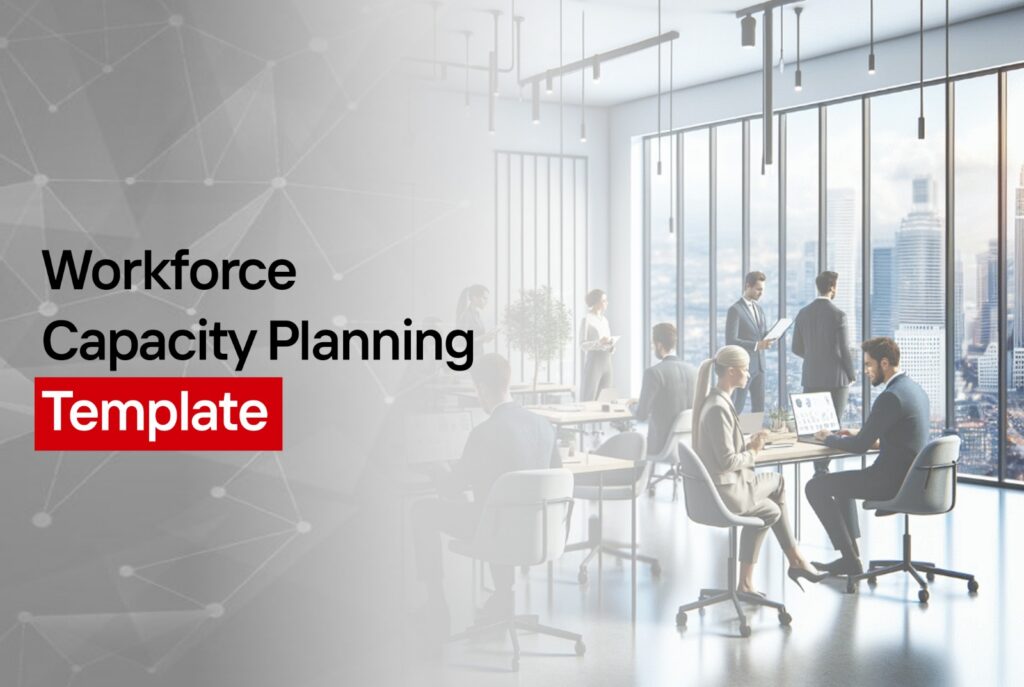
Template 4: Workforce Capacity Planning Template
When to use it:
Project-based organizations, seasonal demand swings, or any team where workload isn’t constant.
What it does:
Headcount planning asks how many people you need. Capacity planning asks whether your current team can absorb what’s coming, or whether you need to hire, redistribute, or bring in external help.
Example:
Google uses predictive modeling and scenario planning to track time-to-productivity, retention risk, and cost of achieving optimum performance.
The bottom line:
You don’t need Google’s infrastructure. You just need consistent data and a habit of asking the right questions before a project starts, not after it stalls.
How the Toolkit Fits Together
Each template works on its own. But together, they form a system.
The strategic plan sets direction. The headcount template turns that into budget. The skills gap analysis shows what needs to shift internally. The capacity plan tells you if your team can actually deliver on time.
ProRail combined all four for a decade-long infrastructure overhaul, retirement forecasts, tech impact, scenario testing, change management, all tied to one business outcome.
Most companies don’t operate at that scale. But the discipline works just as well for smaller teams.
Frequently Asked Questions
Q1: Where should an HR team start with workforce planning?
Start with three questions: what’s your workforce now, what will it need in 1–3 years, and what’s the gap? Everything else builds from there.
Q2: How often should templates be updated?
Strategic plan: annually. Headcount and capacity: quarterly. Skills gap: whenever new tech or capabilities come in. Keep them living documents, not annual exercises.
Q3: How does Tekberry help act on workforce plans?
We connect planning to hiring. Skills gap, capacity need, urgent vacancy- we bring the talent pipeline to close it fast. Reach out to Tekberry and let’s connect your plan to your next hire.
Key Takeaways
- Only 31% of businesses use data to find skills gaps. Templates are the simplest fix.
- The 5 RS give you a framework every template should map to.
- Strategic, headcount, skills, and capacity templates work best together, not as separate files.
- Google, IBM, AT&T, and Unilever all use structured planning to stay ahead.
- Templates don’t need to be fancy. They just need to be used.
Conclusion
Workforce planning done with the right templates is not more paperwork. It is what turns talent decisions from guesses into something the business can rely on.
A strong workforce planning template connects where the organization is today to where it needs to be in three years. A disciplined hiring strategy built on that foundation produces better hires faster. And staffing solutions that come from a real capacity and skills gap analysis solve the actual problem instead of reacting to a vacancy nobody saw coming.
Tekberry helps companies act on their workforce plans, not just build them. Reach out to the Tekberry team and let us figure out where your next hire fits into the bigger picture.
Need the right talent for your team?
Partner with tekberry to access data-driven recruitment solutions that connect you with skilled professionals quickly and efficiently.
Book a Free Consultation