




98% of employees want remote work options, proving the 9-to-5 office era is cracking.
March 2020, the COVID period was life-changing for everyone. An email landed at 4 pm. Effective immediately, the whole office went remote. Everyone grabbed their laptop, took the charger, and tried their best to figure it out.
The thought at the time: two weeks. Easy!
Five years ago, working from home felt like a short-term fix. Today, it has completely changed how employees live, work, and think about their careers.
From freedom and flexibility to burnout and blurred boundaries, remote work created winners, struggles, and a brand-new workplace reality. Let’s explore how this all evolved!
Week One: The Honeymoon Phase
The first few days felt like snow days; nobody had to feel guilty about it. Kitchen table. Fresh coffee. First Zoom call in pajama pants.
Work from home productivity felt almost effortless at first. No open-plan office noise. No one is stopping by mid-thought. Having a dedicated workspace, even just a corner of a room, and sticking to a proper start and stop time made the whole thing feel surprisingly manageable from the beginning.
The first thought was simple: why didn’t we do this sooner? As days turned into months, excitement started to fade. Employees began developing mixed feelings about this new way of working.
Month Three: The Cracks Start Showing
By June, the honeymoon period was over.
The laptop stayed open after dinner. Slack messages got replies at 10 pm, not because anyone asked, just because it was right there.
The commute everyone used to dread had, without anyone realizing it, been the only thing creating a real boundary between work and the rest of life.
As the research suggests, working from home can simultaneously improve well-being by increasing job engagement while also undermining it by blurring the line between work and family life. For many employees, both of those things happen at the same time.
Year One: Finding a Rhythm
By the first anniversary, the pretending-this-is-temporary phase was done. The spare room became a proper office. A standing desk appeared. Morning walks replaced commutes as the mental transition into work mode.
The biggest lesson from long-term remote workers is that communication becomes twice as hard when you’re not in the same building. The informal stuff, the hallway conversations, reading the room, doesn’t happen automatically anymore. You have to build it deliberately.
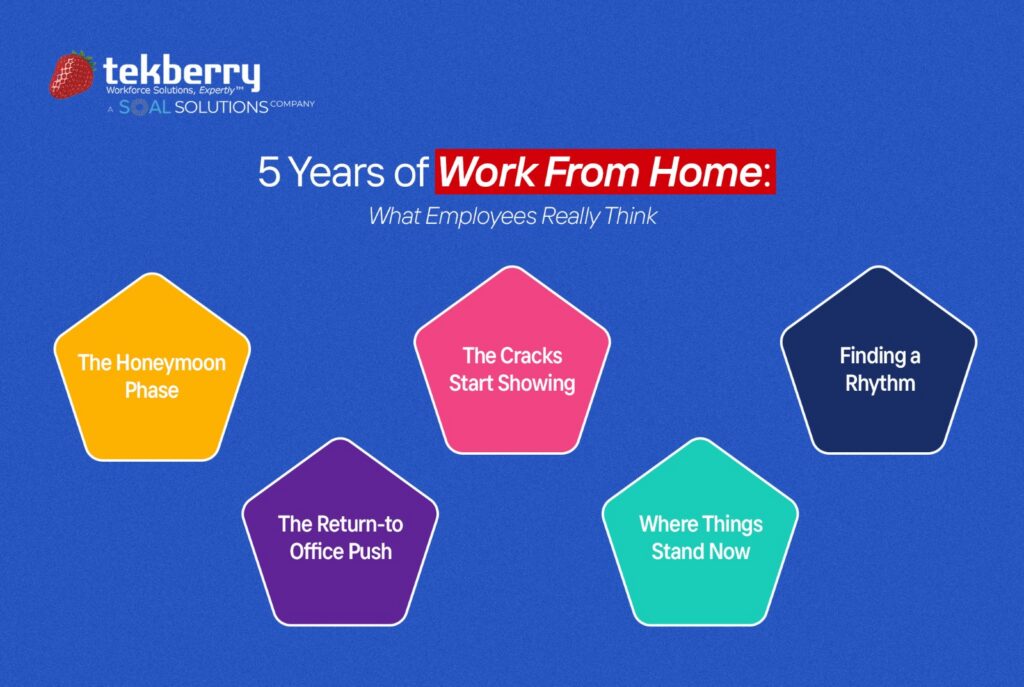
Year Three: The Return-to-Office Push
Then came the mandates.
The email arrived in early 2023. Three days a week, minimum, effective next month. No real explanation, just a policy.
Coming back to the office felt weird. Quieter than anyone expected. Half the desks sit empty on Tuesdays. People in meeting rooms on Zoom calls, doing the same thing they did at home, just with worse chairs.
Remote work showed people that their best work doesn’t come from being seen, it comes from being trusted. When a company cares more about showing up than results, that tells you everything.
Going in when required became the norm.
Year Five: Where Things Stand Now
Five years in, the office isn’t the enemy. Most people just know themselves better now.
Writing? Better at home. Brainstorming? Better around other people. The hybrid work challenges, the back and forth, the switching contexts, never being sure which mode you’re supposed to be in, those are real issues. And they wear you out if nobody’s being thoughtful about how to make it all work.
The data backs this up. Remote employees perform better when their needs are met, and they feel trusted. Remote vs. on-site productivity isn’t really about where you work. It’s about whether you’re set up to actually do your work.
Nobody hates offices. They just hate the pointless stuff that comes with them.
What Five Years Actually Taught People
The remote work experience didn’t just change where work happens. It changed how people think about work itself.
Effort stopped being measured by hours of visibility. It started being measured by what actually got delivered. Tolerance for meetings that could have been emails dropped considerably. Relationships deepened with colleagues never met in person, sometimes more than with people who sat nearby for years.
What worked wasn’t the location. It was having the autonomy to choose how to do the work, and being trusted enough that the choice was actually real.
That’s not a remote work trend in 2026, that’s just what five years of figuring it out actually feels like.
FAQs
Is remote work actually better for productivity?
Honestly, for most people with desk jobs, yes, if you do it right. Work-from-home productivity tends to go up when someone has a quiet spot to work, knows what’s expected of them, and isn’t getting micromanaged.
Where you sit doesn’t matter nearly as much as whether you’ve got what you need to do your job without a bunch of nonsense getting in the way.
What are the biggest hybrid work challenges companies face?
The problems most companies face while working hybrid aren’t mostly technical but about who gets heard the most, as some people are in the office and others are not, the ones in the room get more face time with leaders. A nice policy won’t fix that. It takes real work.
What do remote work trends 2026 say about where this is all headed?
Remote work trends 2026 show things are leveling out. Most companies have settled on some form of hybrid, and most employees are fine with it, as long as the flexibility is real. The ones still fighting their people over the work’s location? They’re losing talent. The data isn’t subtle.
Conclusion
After five years of remote work experience, one thing is clear: Work-from-home productivity isn’t about the home; it’s about the conditions. The hybrid work challenges that remain aren’t technical; they’re cultural. And remote work trends 2026 all point to the same thing: people do their best work when they’re trusted, supported, and have a real say in how they operate.
Tekberry Workforce Solutions helps companies build tech teams that can work for both short and long-term periods.
Because the future of work isn’t a location. It is about the dedication.
Need the right talent for your team?
Partner with tekberry to access data-driven recruitment solutions that connect you with skilled professionals quickly and efficiently.
Book a Free Consultation